

| |
Born
Louis Freeman in London, Scottie Wilson was brought up in Glasgow.
He left school when he was nine, destined to remain more or less illiterate
throughout his life, and sold newspapers to'supplement his family's
meagre income, later working as a market trader. He joined the British
army at the age of eighteen, serving in India, South Africa, and on
the Western Front in the First World War. Some time after the war
he changed his name and emigrated to Toronto where he ran a second-hand
shop and where he began to draw images of the eternal struggle between
good and evil. From the start he disliked selling any of his pictures
and attempted to solve the problem of raising money by staging travelling
shows for viewing only and charging entrance fees or holding tray
collections. He returned to Britain early in 1945, settling in Kilburn,
London, where he continued this practice, although he was quickly
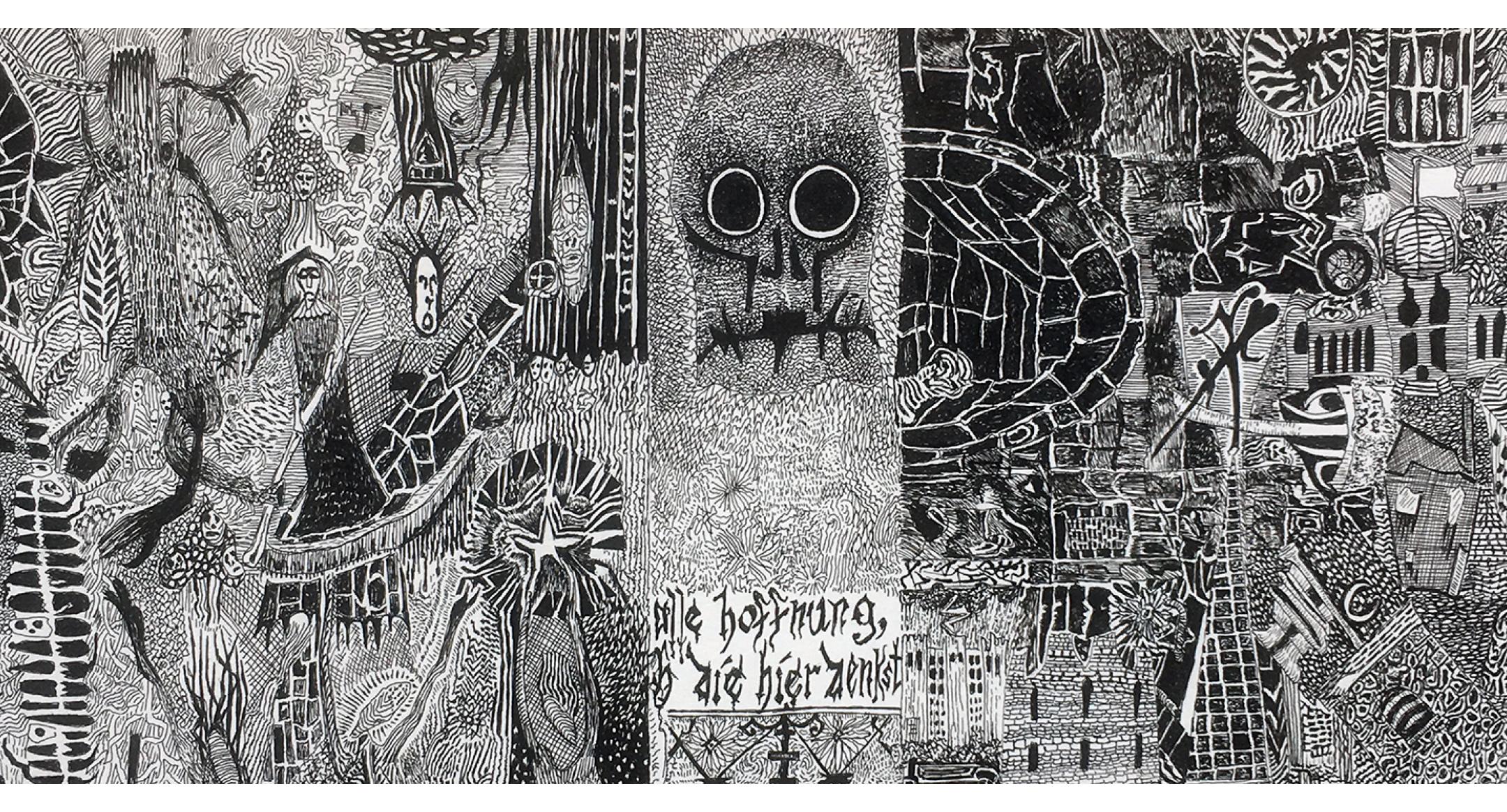
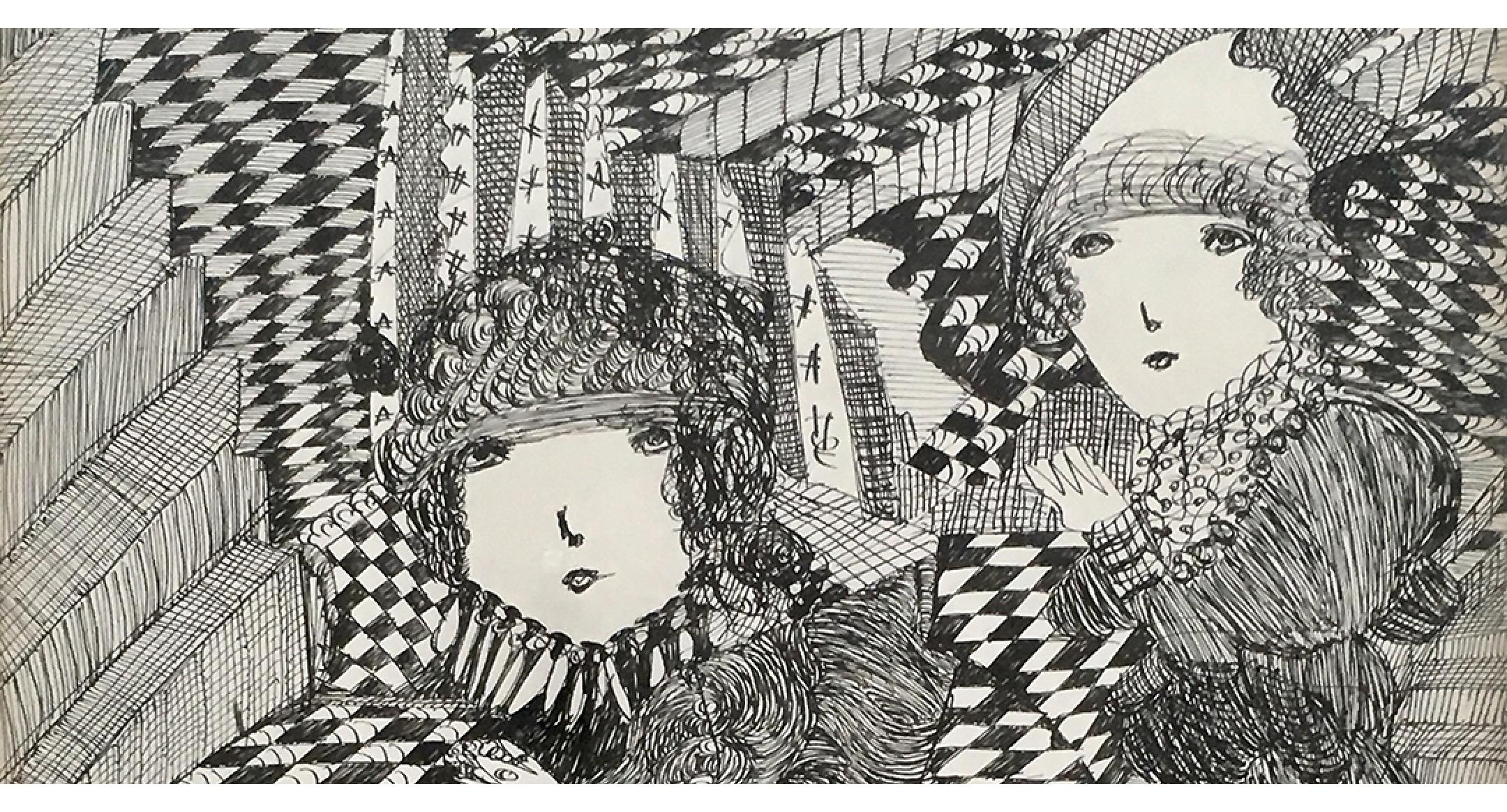
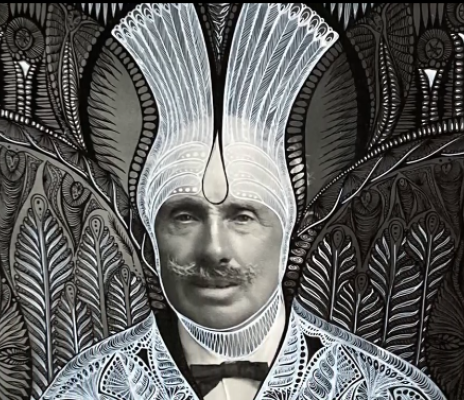
taken up by London's Surrealists. Wilson relied on a relatively narrow
range of visual elements - botanical forms, birds and animals, clowns
(self-portraits), and 'Greedies' and 'Evils' (malignant personifications).
At times his images seem to contain references to North American totem
poles or to Indian decoration, although always they arise out of hypnagogic
experiences of internal apparitions. As he once said, 'I got into
a trance and when I wake up they're all waiting for me: Wilson's obsessive
technique produced visionary outpourings that could be both brooding
and utopian:
'When I'm working I can see what's happening, and I can imagine what's
going to happen. I can see best when I'm finishing my pictures with
a pen. When I'm making strokes; hundreds and thousands of strokes'.
Scottie Wilson's
work is represented in the Tate Gallery, London; The Collection
de l'Art Brut, Lausanne; Anthony Petullo Collection and many other
museums worldwide. |
|
For
further information
and a list of works
currently available
 |